Published by Team Tunupa / March 12, 2026
An hour from Cusco, the Vilcanota River opens into a green, mild and fertile valley that the Incas chose as their pantry and their retreat. Terraces climbing the slopes, adobe villages, colorful markets and snowcapped peaks in the distance: the Sacred Valley is not something you rush through. It is something you live.
This guide helps you plan your visit calmly, understanding what makes each place special and how to enjoy the valley beyond the photo.

Why the Sacred Valley mattered so much to the Incas
The valley sits lower than Cusco, between 2,800 and 3,000 meters above sea level. Its mild climate and the waters of the Vilcanota made it the most productive farming area of the empire. This is where the corn that fed the capital was grown, corn that was also used in ceremonies.
That is why the valley is full of terraces, storehouses, temples and administrative centers. Each town had a role: to grow, to store, to watch over or to worship.
Must-see places in the valley
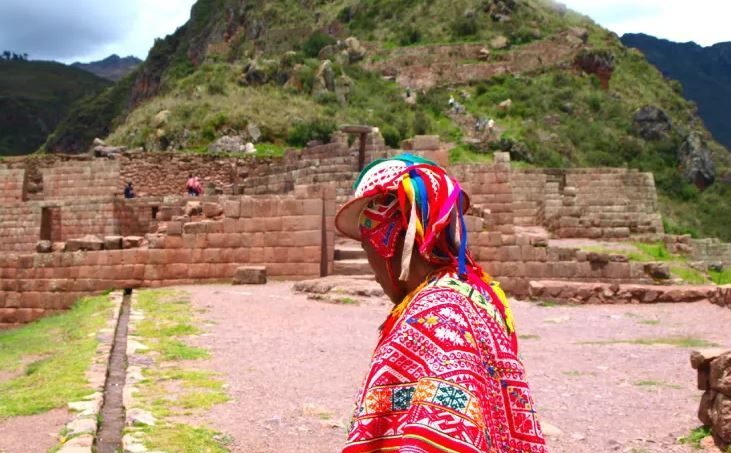
- Pisac: a lively craft market and, above the town, an archaeological park with spectacular terraces.
- Urubamba: the heart of the valley and a great base for sleeping and getting around.
- Ollantaytambo: an imposing Inca fortress and a town that keeps its original layout. Trains to Machu Picchu leave from here.
- Chinchero: weavers, a colonial church built on Inca walls and views of the snowcapped peaks.
- Moray and Maras: the circular terraces of Moray and the salt pans that have been worked for centuries.
When to go and how to get around
April to October is the dry season: clear skies, sunny days and cold nights. From November to March it rains more, but the valley is greener and there are fewer visitors.
You can explore it on a full-day tour from Cusco, by private taxi or by public transport. If you have time, stay one or two nights: the valley is lower than Cusco, so it is a good place to acclimatize before heading up to the city.
Several sites, such as Pisac, Ollantaytambo, Chinchero and Moray, are visited with the Cusco Tourist Ticket (Boleto Turístico). The Maras salt pans have a separate entrance fee.
Tips to enjoy it more
- Dress in layers: the sun is strong at midday and it gets cold quickly at sunset.
- Wear sunscreen and a hat, even when it is cloudy.
- Carry cash in soles for markets and communities.
- Ask before taking photos of people.
- Leave time to do nothing: a long lunch with mountain views is part of the trip too.
Tunupa Sacred Valley: a break among the mountains
In Urubamba, surrounded by gardens and mountains, Tunupa Sacred Valley is the place to recharge in the middle of your day. Our buffet brings together Cusco and Peruvian dishes made with produce from the valley itself: corn, native potatoes, quinoa, trout and Andean herbs.
We also host experiences for groups, such as cooking classes, pachamanca and Andean earth offering ceremonies.
Conclusion: a valley worth staying in
The Sacred Valley is much more than the road to Machu Picchu. It is a place to walk slowly, taste what the land gives and understand why the Incas considered it sacred.
Give it time. The valley always gives back more than you expect.
