Published by Team Tunupa / February 15, 2026
In Cusco, art is not hung on walls: it is worn, woven, used and danced. In every poncho, every piece of pottery, every embroidery, a story lives. Cusco handicrafts are not merchandise: they are a way of preserving memory, honoring the ancestors and continuing to speak Quechua even as the world changes.
Whoever walks through Cusco’s markets and workshops does not only find beautiful objects: they find a web of knowledge that has survived centuries, wars, modernity and silence. A web made of hands that learn from grandmothers, of natural dyes, of sacred symbols and of a worldview that understands that everything is connected: the thread, the mountain, history and the body.
Textiles that tell stories
If there is one emblem of Andean craft, it is textiles. And in Cusco, weaving is not a trade, it is a language.
Each community has its own colors, symbols and techniques. In places like Chinchero, Patacancha, Willoq or Amaru, looms are part of daily life. There, women (because it is almost always women) spin alpaca or sheep’s wool by hand, dye it with cochineal, muña or molle, and weave slowly on a backstrap loom. No machines. Only patience, memory and love.
The designs are not decorative: each figure represents something. A chakana, a condor, a lagoon, a potato seed. Sometimes even personal stories: births, marriages, migrations. Wearing an Andean textile is wearing an entire worldview.
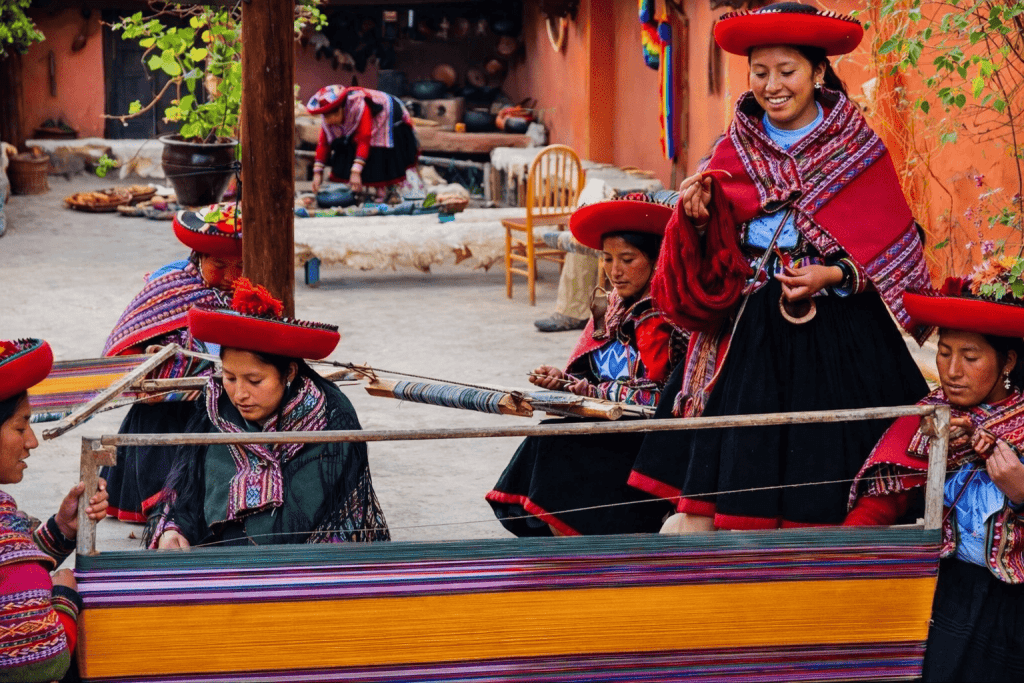
Natural dyes: the alchemy of the earth
One of the lesser-known wonders of Cusco craft is how the colors are made. Natural dyes are an art in themselves.
Cochineal, the tiny insect that lives on cactus, gives intense reds. Indigo gives deep blues; eucalyptus, greens; purple corn, lilacs and violets. To fix them, salt, lime or ash are used.
Each combination requires precise knowledge of timing, proportions and temperatures. It is a way of doing chemistry with centuries of wisdom.
The use of natural dyes is also a form of ancestral sustainability: no chemicals, no waste, with deep respect for the earth.
Ceramics and symbols of time
Cusco’s potters also keep an ancient tradition alive. From pieces inspired by Inca culture, such as the queros, ceremonial cups, to everyday objects like pots, mugs and jugs, clay is shaped by hands that remember.
In places like Raqchi or Paucartambo, traditional firing techniques and natural pigments are still used. Many pieces express the duality of the Andean world: sun and moon, man and woman, above and below. Others, like the famous Pucará bulls, are placed on rooftops as symbols of protection, abundance and fertility.
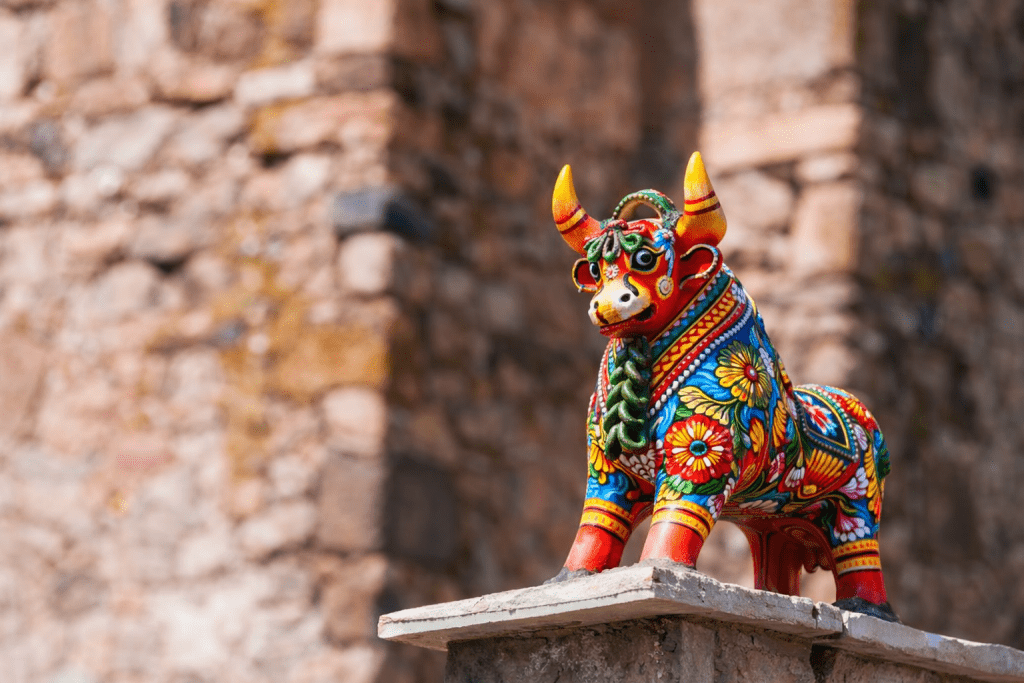
Masks, music and festivals
Craft in Cusco also comes alive at festivals. The dancers’ masks of Inti Raymi, Corpus Christi or the Virgen del Carmen festival in Paucartambo are masterpieces in their own right.
Made of plaster, leather or wood and hand-painted in vibrant colors, they depict mythical characters, devils, conquistadors, sacred animals and even political figures. Each mask has a role, a rhythm and an intention. Some make people laugh. Others, afraid. Others simply inspire respect.
Those who make them are artists with deep knowledge of the dances, traditions and emotions of the people. They are guardians of the community’s festive memory.
Craft as resistance
Cusco craft has not survived out of romanticism. It has survived through resistance.
During colonial times, Andean symbols were banned and hidden in the unseen edges of blankets or in undergarments. Later, with globalization, many techniques were threatened by mass production and soulless souvenirs.
Today, however, there is a revival. Many young people are relearning their grandparents’ crafts. Cooperatives, ethical brands and community workshops are emerging. Some designers blend the ancestral with the contemporary. And travelers looking for authentic experiences, like you, reader, are part of that chain of care.
Buying a handmade piece is not a transaction: it is an act of respect.
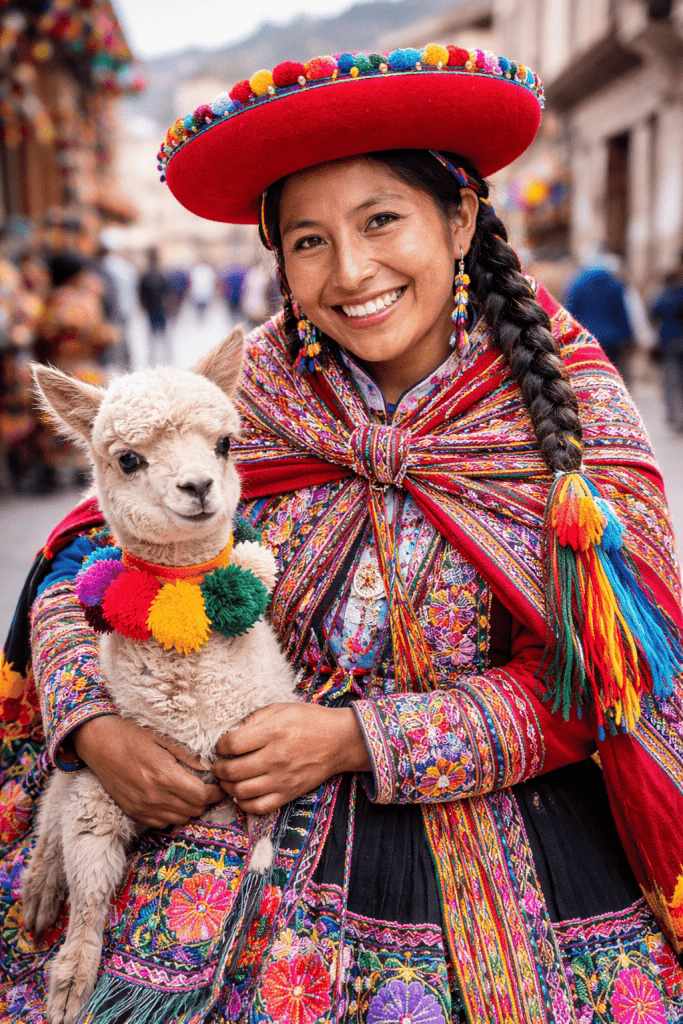
Where to find authentic crafts in Cusco
If you want to take a piece of Cusco’s soul home with you, these are some recommended places:
- Center for Traditional Textiles of Cusco (Av. El Sol): where you can buy and learn about the communities that weave each piece.
- San Pedro Market: busier and livelier, with plenty of affordable options, especially if you browse with respect.
- San Blas neighborhood: the hub of artists and workshops for ceramics, wood, silver and painting.
Craft fairs in Chinchero, Pisac or Urubamba: ideal for connecting directly with the makers.
Craft is also served at the table
At Tunupa, we understand that craft is not only worn or hung on the wall. It is also served, smelled and touched.
Our dishes are made with ingredients from artisan communities: purple corn, local cheeses, breads with history. Our tableware is often made by Cusco potters. And the restaurant’s atmosphere itself, the textiles, the colors, the music, is a tribute to that handmade wisdom.
Visiting Cusco without stopping to look at its crafts is like eating without tasting.
And if, after exploring the markets, workshops and fairs, you want to keep celebrating the authentic, we look forward to welcoming you at Tunupa to end that journey with all your senses.
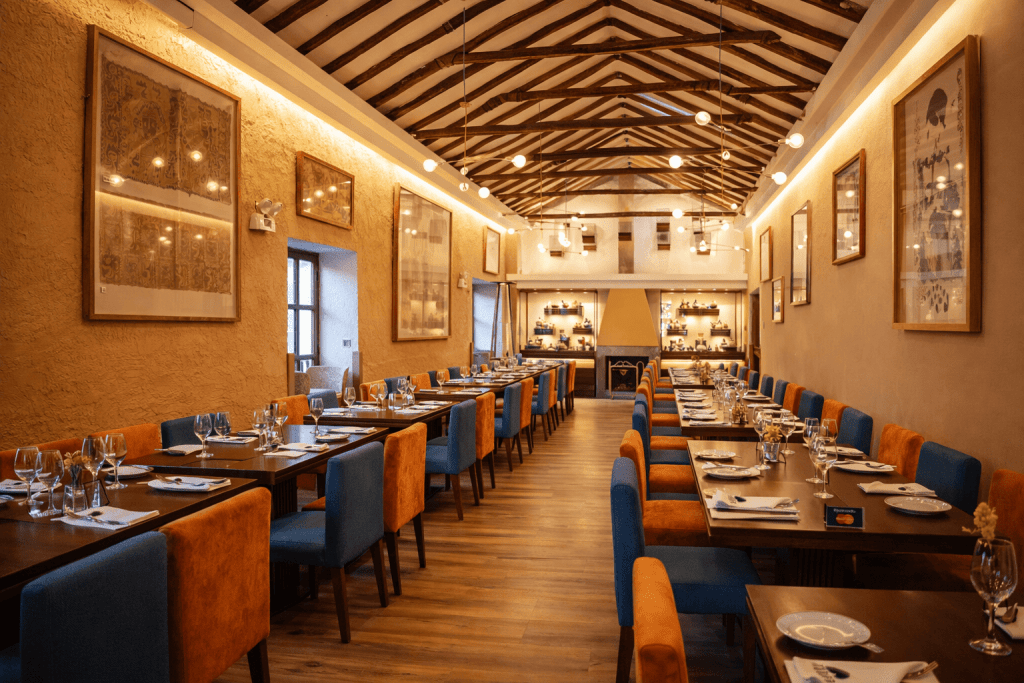
Cusco is woven with threads of soul
Cusco craft is not just a souvenir. It is a way of telling what is never forgotten.
A language without words. A song in the shape of an object.
And as long as someone keeps weaving in the mountains, shaping clay with care, painting masks with passion or spinning memory with their fingers… Cusco will keep beating.
In the land, in the festival, and of course, in your hands.
