Publicado por Team Tunupa / 27 de Julio 2025
There are rituals that are more than customs; they are bridges to our deepest essence. The Andean Earth Offering, known in Quechua as Pago a la Tierra, is one of the oldest and most meaningful ceremonies of the Andes. It is how Andean communities express gratitude to Pachamama, the mother who nourishes and sustains life.
Pachamama is more than Mother Earth—she is everything that holds us: land, time, space, body, and spirit.
In Cusco, where the mountains seem to whisper stories and the rivers hold the memory of time, this ritual lives on as a celebration of life, abundance, and the sacred balance between people and nature.

What is the Andean Earth Offering and where does it come from?
The Earth Offering dates back to the earliest agricultural cultures of the Andes, long before the Inca Empire. For these communities, the earth was not a resource to exploit—it was a living mother, giver of food, health, and protection.
From this belief was born the sacred law of ayni: if you receive, you must give back.
Over time, the Incas perfected the ceremony, adding symbolic and spiritual meaning. The paqos (wise Andean priests) prepared ritual tables (mesas) filled with sacred elements:
Coca leaves – sacred messengers asking permission from the gods.
Corn, tubers, and fruits – gratitude for fertility and sustenance.
Chicha de jora – shared with Pachamama as a gesture of trust and unity.
Candies, colorful wool, and miniatures – symbols of joy, prosperity, and future wishes.
The offerings were placed in sacred sites: freshly planted fields, crystal-clear rivers, and above all, the Apus—the sacred mountain spirits who protect Andean communities.
The ritual ended with the offerings either burned, sending their aroma to the sky as a message to the gods, or buried, returning them to the earth as an act of deep respect. Collective gratitude was believed to be powerful—when many hands gave thanks together, Pachamama smiled and blessed the entire community.
How is the Earth Offering celebrated in Peru today?
Today, the Pago a la Tierra remains an essential part of Andean life, especially in August, the Month of Pachamama. Across Peru, families gather to give thanks for health, life, and harvests.
In rural areas, Andean masters continue guiding these ceremonies, preserving the same words and gestures used for centuries.
Each element of the ritual table carries a sacred meaning:
Coca leaves: direct connection to the divine.
Corn and potatoes: gratitude for fertility and food.
Andean sweets: a wish for a joyful, prosperous future.
Group ceremonies are considered stronger because collective energy multiplies good intentions.
The Earth Offering in Cusco – Mysticism and Gratitude
Experiencing the Andean Earth Offering in Cusco is to feel the very heart of Andean spirituality. In the Sacred Valley, where the wind caresses sacred mountains and the Urubamba River murmurs ancient stories, this ritual gains a unique strength.
The Apu Tunupa, protector of Ollantaytambo and one of the most revered mountain spirits, is believed to guard those who honor Pachamama in his presence. Participating in a ceremony here is like being embraced by the ancient guardians of the Andes.
For many travelers, this is a transformative experience. It is not just watching a cultural act—it is living it: feeling the soil under your feet, breathing the scent of sacred offerings, and realizing that the mountains, rivers, and sun are alive and deserve respect.
Experience the Andean Earth Offering at Tunupa in the Sacred Valley
At Tunupa, we believe that honoring Pachamama is honoring our roots. That is why we offer a special Pago a la Tierra ceremony, guided by authentic Andean masters, perfect for those seeking a genuine, soulful experience.
Imagine giving thanks surrounded by sacred mountains, feeling the fire purify your offerings, and hearing the wind as if it were the voice of the Apus. In that moment, you understand this is not just a ritual—it is a journey to the heart of the Andes, an opportunity to give thanks, to ask, and to heal.
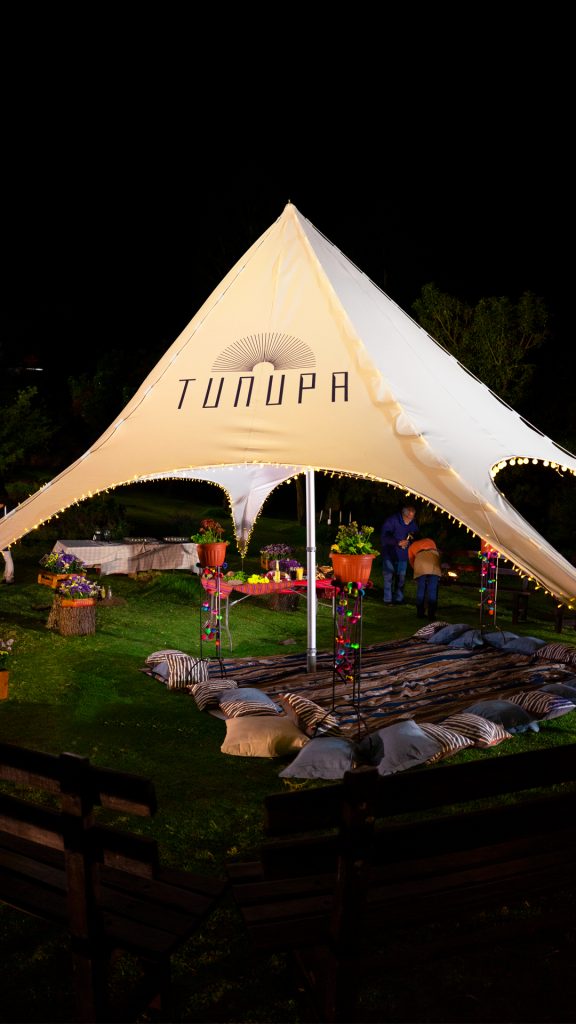
Tips for joining an authentic ceremony
Respect the moment – follow the Andean master’s guidance with humility.
Participate with intention – your thoughts and wishes are part of the offering.
Wear neutral colors and comfortable clothes – a sign of respect for Pachamama.
Go with an open heart – this is not a show; it is a sacred act.
In the Sacred Valley, under the watchful gaze of the Apus, the Earth Offering is still alive like an ancient song. Come live it at Tunupa and connect with the deepest essence of the Andes.
