Published by Team Tunupa / November 25, 2025
A Christmas under the sun of Taita Inti
Christmas in Cusco is like no other. While in other parts of the world the cold wraps the streets, here the sun of Taita Inti bathes the Inca stones in golden light, and the whole city fills with color, faith and community. In the heights of the Andes, Christmas is a song to life, a celebration where faith and the earth embrace.
In December, colonial balconies are dressed with flowers and stars. The streets of the historic center smell of cinnamon, bread and anise. Christmas carols blend with quenas and panpipes, and people walk with a calm smile, preparing for one of the most beloved celebrations of the year.
At Tunupa Cusco, Christmas is lived as a time of gathering. The table becomes a symbol of unity, flavor a language of gratitude, and food a bridge between tradition and the present. Here, the celebration has a Cusco soul: full of history, mysticism and humanity.
Santurantikuy: the soul of Cusco art
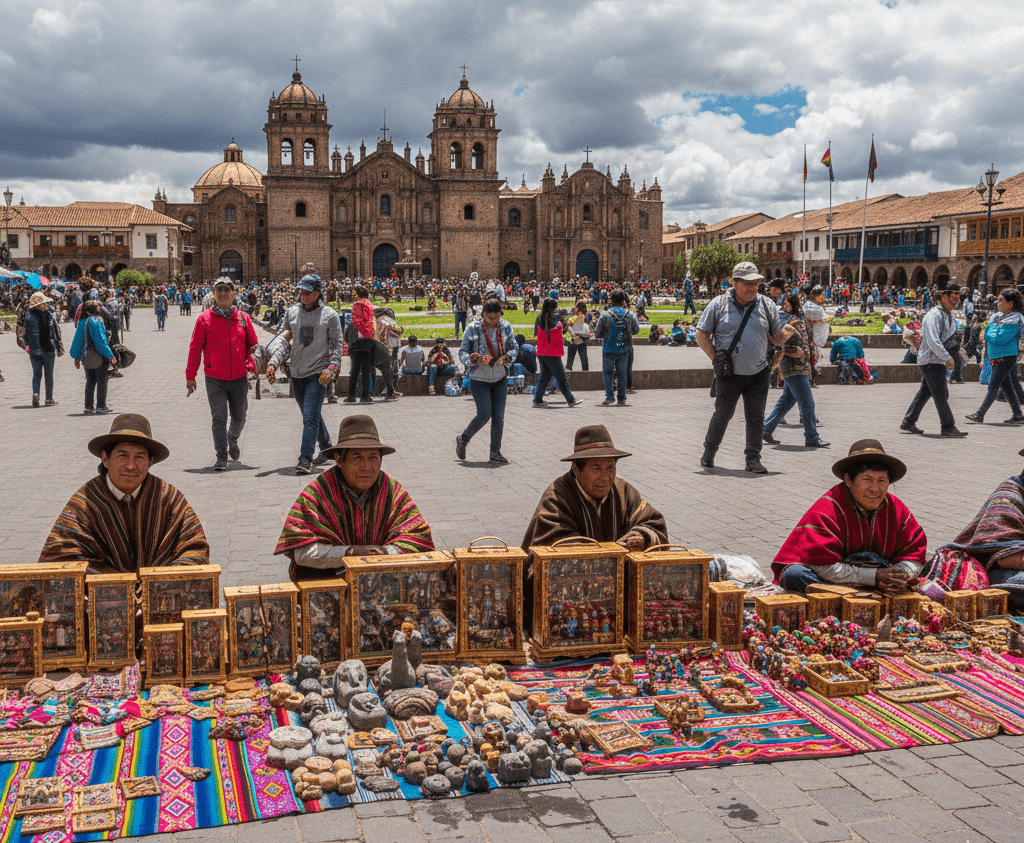
Every December 24, as the sunlight begins to fade and shadows stretch across the Plaza de Armas, Cusco is transformed. Thousands of artisans from nearby towns arrive with their blankets, retablos and small sculptures. It is the day of Santurantikuy, Peru’s most iconic Christmas fair and one of the oldest in all of Latin America.
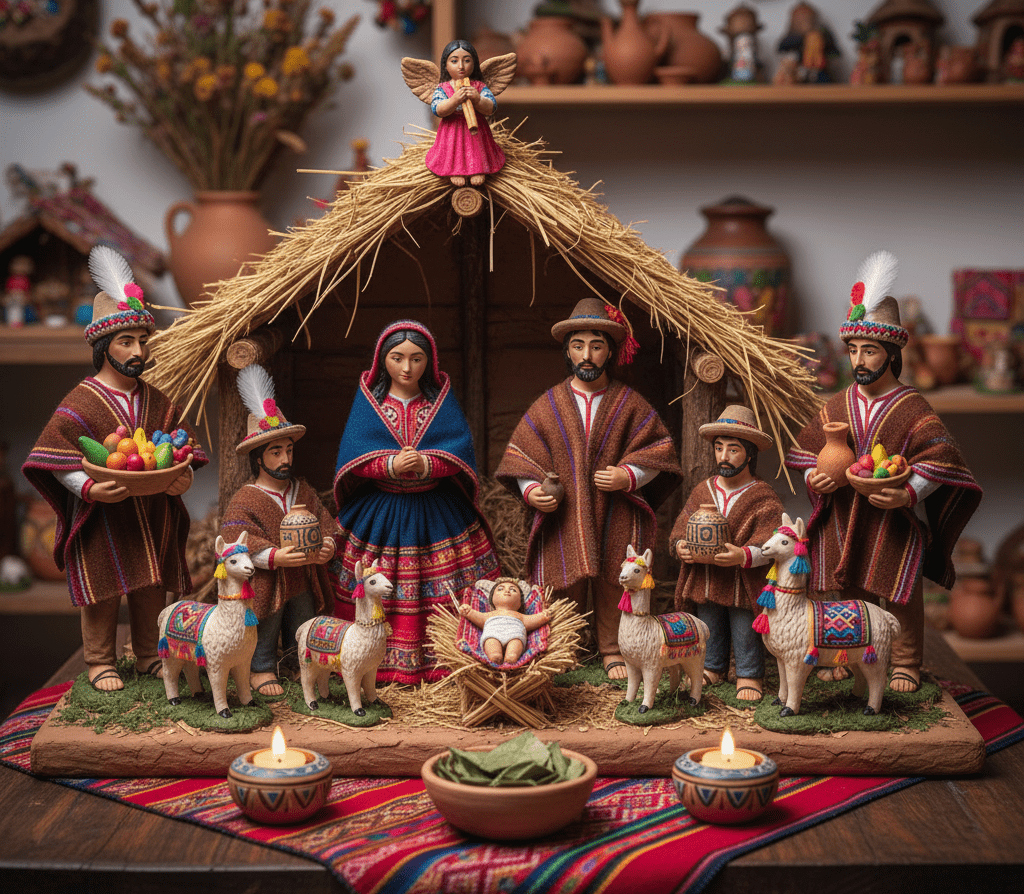
The name means “buying of saints” in Quechua, and that is exactly what happens: men and women offer clay, wood and stone figures depicting the birth of Jesus, but with a deeply Andean soul. Baby Manuelito, dressed in a poncho and sandals, rests on a bed of ichu grass. Around him, llamas replace camels, the shepherds are farmers and the virgins dress like the Andean women of Cusco and Puno, with colorful shawls and skirts.
Walking through Santurantikuy is stepping into the living history of Cusco. The scents of incense, coffee and medicinal herbs mix with the cheerful bustle of visitors.
Each carved figure is a small work of art carrying the wisdom of generations. Buying a piece here is not just getting a souvenir: it is taking home a fragment of the soul of the Andes.
Andean nativity scenes: symbols that tell stories
In Cusco homes, nativity scenes are not mere decorations. They are small representations of the Andean universe, where Christian spirituality blends with the Inca worldview. Baby Jesus is called Manuelito, a serene-faced figure smiling at the people. Around him, the Apus, guardians of the mountains, watch from above, and the Pachamama appears in the flowers, fruit and corn that decorate the cribs, a reminder that everything is born from and returns to the earth.
Families prepare their nativity scenes weeks in advance. Mothers dust off carefully stored figures, children lay fresh moss gathered from the countryside and grandparents tell old stories about the origins of Niño Manuelito. Every detail has meaning: the llama represents patience, corn abundance and water life.
In many towns of the Sacred Valley, nativity scenes are built as a community. Neighbors and relatives gather to raise altars with stones and flowers, and at nightfall candles light up the faces of those who join in singing carols in Quechua.
Christmas in Cusco is not just a religious date: it is a cultural reaffirmation. It is the fusion of the sacred and the human, of faith and the earth, of the sky and the Andes.
The Andean Christmas table: flavors with soul
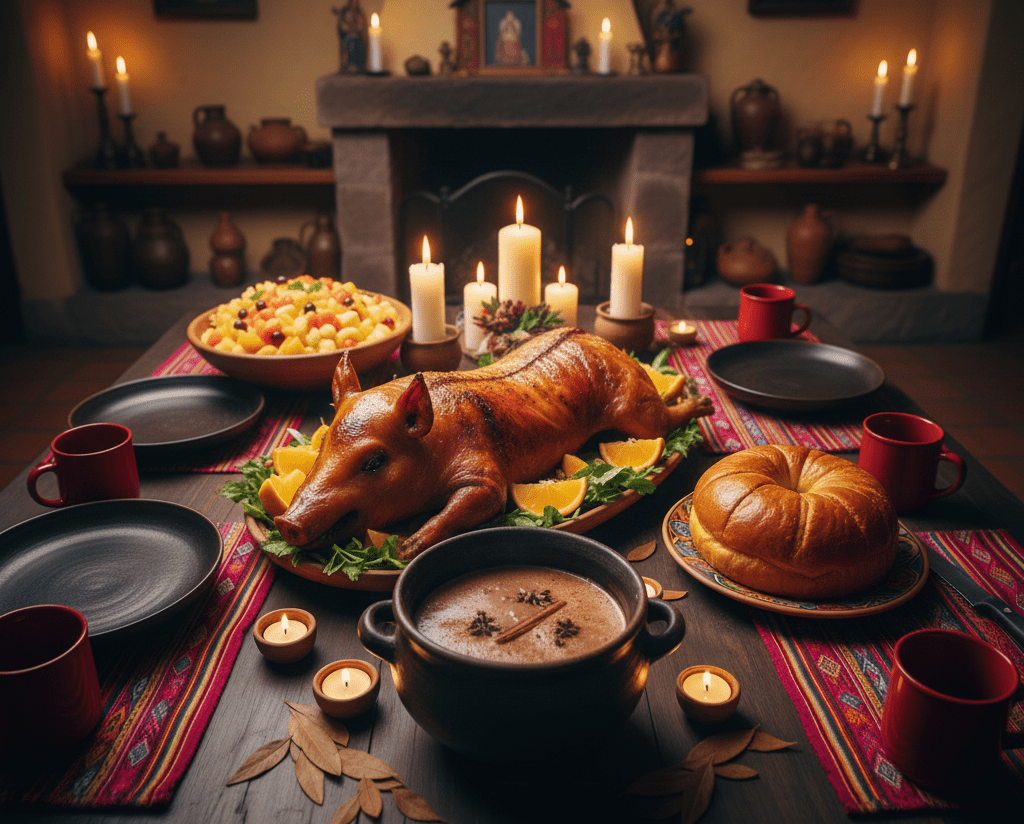
In Cusco, the Christmas table has the power to bring everything together: traditions, stories and affection. While turkey rules the dinner on Peru’s coast, in the Andes the star is oven-roasted suckling pig or, for many families, a hearty broth made with aromatic herbs, chilies and chicha de jora. Its aroma fills the streets from early on, marking the start of the celebration.
Alongside the pork there is always fruit salad, thick hot chocolate with cinnamon and cloves, and the essential artisan panettone, which in Cusco has a sweeter, warmer taste, sometimes served with fresh butter or local honey. Every family adds its own touch: some make white corn tamales, others purple corn pudding or hot api.
At Tunupa Sacred Valley, Christmas is celebrated with a menu that pays tribute to these ancestral flavors. Products of the land, native potatoes, purple corn, quinoa and high-Andean fruits, are the stars. Our chefs turn traditional ingredients into a contemporary experience without losing their Andean essence. The result: a table that invites you to toast to life, family and nature.
Tunupa and Christmas: unity, family and gratitude
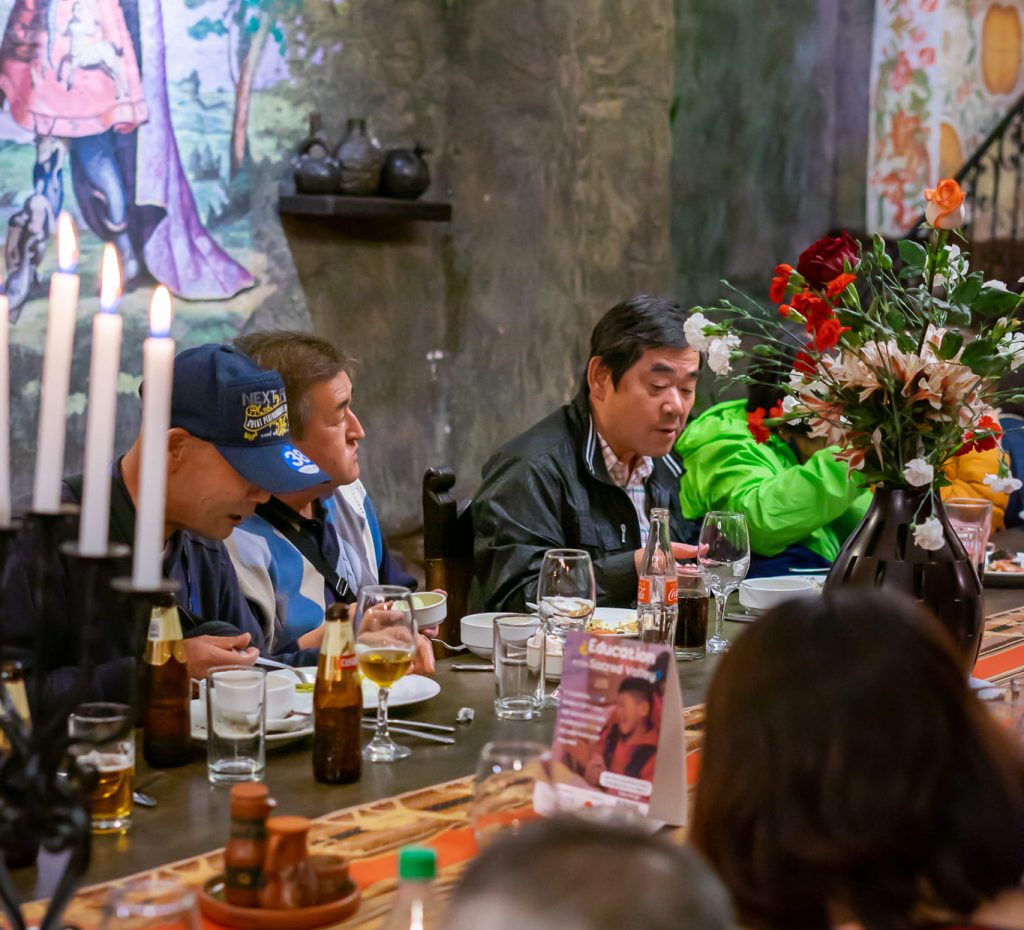
For us, Tunupa is not just a restaurant: it is a guardian of Cusco tradition, a home where food is shared with respect and joy. At Christmas, every detail takes on special meaning. Warm lights illuminate the stone walls, candles flicker by the tables and live music, a mix of Peruvian carols and Andean melodies, accompanies dinner as if time stood still for a moment.
Every dish we serve at this time has a story. Freshly baked bread evokes the work of baking families; wine or chicha stands for unity; the Andean cacao dessert celebrates the sweetness of the land. But above all, every gathering at Tunupa is a celebration of Cusco hospitality, the kind that makes every visitor feel at home.
In our two houses, Tunupa Cusco and Tunupa Sacred Valley, we celebrate Christmas with the same essence: gratitude. We thank those who visit us, those who farm the land and those who keep alive the traditions that inspire us. Because in Cusco, Christmas is not measured in gifts, but in simple gestures, sincere hugs and shared tables.
December: the month when faith is shared
December in Cusco is a feast for the senses. Church bells ring loudly, the sky shines deep blue and the whole city fills with processions, masses and festivities. Santurantikuy marks the start of the sacred season, and on Christmas Day the streets wake up in silence, wrapped in an atmosphere of peace.
In the towns of the Sacred Valley, communities celebrate with traditional dances such as the Negrillo of Ollantaytambo or the Qhapaq Negro of Paucartambo, where locals in colorful costumes and carved masks honor Niño Manuelito with songs and drums. It is the expression of a joyful, living faith that ties the people to their history.
For the people of Cusco, Christmas is a chance to give thanks for the year ending and ask for blessings for the year ahead. Although the Earth Offering is practiced most intensely in August, in December there are versions of thanksgiving and closing of the cycle, for the fruits received and to renew the wishes for the coming year.
The deeper meaning of an Andean Christmas
In the Andes, Christmas is not only the birth of Jesus; it is also the rebirth of the sun, of time and of hope. In the ancient Inca worldview, December marked the summer solstice, the moment when Taita Inti reached its greatest strength. That is why Christmas festivities in Cusco are full of solar symbols: lights, candles and golden colors. Everything recalls that life is renewed by the energy of the earth and sky.
This fusion of the ancestral and the Christian makes Christmas in Cusco one of the most authentic experiences in Peru. It is not just about watching, but about feeling: human warmth, children’s smiles, the sound of guitars and panpipes, the taste of freshly toasted corn and the scent of freshly baked bread.
At Tunupa, we work to keep that essence alive. Every dish we serve at this time is an act of respect for tradition, a way of saying that Andean customs are not lost: they are transformed, shared and celebrated.
A Christmas with the soul of the earth
As evening falls over Cusco, the lights of Santurantikuy begin to glow.
The last visitors buy their clay figures, children run around laughing among the songs and the air fills with hope. From the restaurant’s windows you can see the Cusco sky turning gold and violet, as if the Apus were also celebrating the arrival of Niño Manuelito.
In that instant, time stands still. Everything becomes simple and sacred: the fire warming the oven, the corn slowly toasting, the music that soothes the soul. That is Christmas at Tunupa: an invitation to return to what matters, to remember that true abundance lies in sharing.
Conclusion: the Christmas that blooms in the Andes
Christmas in Cusco is an experience that goes beyond lights or gifts. It is a season when spirituality is in the air, when art, food and community come together to honor life. From Santurantikuy to the family dinner, every moment is full of meaning, history and love.
At Tunupa, we celebrate Christmas with an open heart, as the people of Cusco do. Among sacred mountains and glowing tables, we toast to unity, gratitude and the faith that binds us as a community. Because deep down, Christmas in the Andes is not just celebrated: it is lived, felt and given thanks for.
